
A passionpreneur is someone who turns their passion, hobby, interest or personal purpose into a business venture — something that both fulfills them personally and generates income. Rather than taking the traditional route of a job just for stability, passionpreneurs try to build something that aligns with their values, interests, skills, and long-term vision.
Key components usually include:
- Deep personal interest or love for what they do
- Willingness to take risks (time, money, reputation)
- Lean startup mindset: beginning small, iterating, often bootstrapping
- High use of digital/social media & networks to build visibility and community
- Desire not just profit, but impact, authenticity, or meaningful work
Realtime Passionpreneurs
🎥 1. Prajakta Koli – From Radio Intern to YouTube Star & Actor
Prajakta started as an intern at a radio station in Mumbai but felt restricted by the traditional format. She turned to YouTube, launching her channel MostlySane in 2015. Her relatable comedy sketches quickly attracted millions of followers. Today, she’s not just a digital creator but also an actor in films and OTT shows, and a UN Youth Ambassador. Prajakta turned her passion for storytelling and humor into a powerful platform with global impact.
🛍 2. Falguni Nayar – From Investment Banker to Beauty Entrepreneur
Falguni had a successful career as an investment banker but always dreamed of starting her own business. In 2012, she launched Nykaa, combining her passion for beauty products with her expertise in finance. Nykaa disrupted India’s beauty and e-commerce space, becoming one of the first women-led unicorn startups in the country. Her story shows how passion paired with strategy can build an empire.
What’s Fueling / Enabling Them in India
Several socio-economic and technological changes are enabling or accelerating the rise of passionpreneurs in India:
- Digital infrastructure & social media
Platforms like Instagram, YouTube, WhatsApp, Telegram, TikTok (and its alternatives), etc. let people share content, build a following, sell directly, or market services/products without large upfront investment. - E-commerce & Direct Selling
More tools & platforms to sell online (marketplaces, own websites, social commerce) make it easier to convert an interest or niche skill into products or services. Direct-selling models also provide chances for supplemental income. The Times of India - Changing mindset, aspiration & values
As incomes rise, people (especially younger generation) look not just for salary but for meaningful work, self-expression, autonomy, and work-life blend. Passion and purpose matter more. - Lower barriers to entry
For many passion ventures, big capital isn’t required: minimal viable product/ service, digital tools, home operations, low overheads. - Access to mentoring, communities, workshops
Coaches, business mentors, workshops/events centering around “turning passion into profit” are growing. For example, Dev Gadhvi’s “Passionpreneur Connect” draws thousands.
Case-Studies
Here are some real or recent examples of passionpreneurs in India:
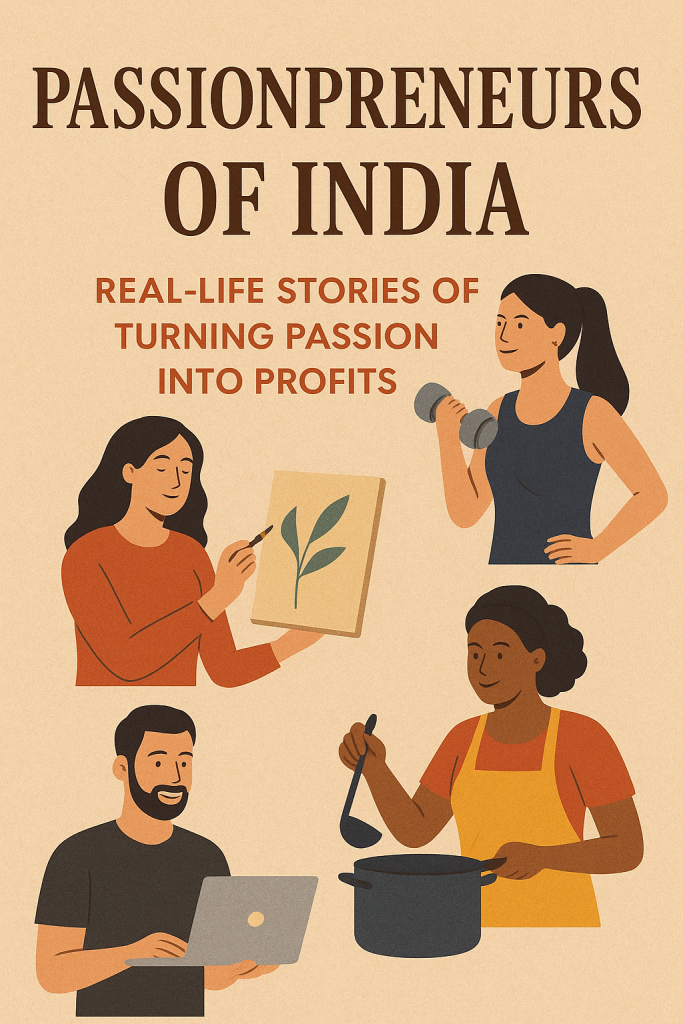
- Swagatika Chand: An IT professional who pursued fitness socially. She built an Instagram community, does online workouts, shares nutrition tips. Her passion for health & fitness became her side venture.
- Abisesh Mohapatra: With background in Marketing & Operations, followed family’s direct selling business, then expanded into wellness and fitness coaching.
- The YourStory article about TrackMyPhones: twins who started by building apps as hobby, later built a business around phone security apps.
Challenges / Risks
Being a passionpreneur sounds great, but there are pitfalls and challenges to watch out for:
| Challenge | Why It’s Hard / What to Watch For |
|---|---|
| Monetization & sustainability | Turning passion into income often takes time. Many start with low margins; scaling brings costs. Sometimes what you love doing may not immediately pay well. |
| Burnout | Because the work often intersects with personal interest, boundaries can blur. Over-working, being “always on,” managing hobby + business + social media can get stressful. |
| Competition & saturation | Since digital tools lower barriers, many people try similar things. Standing out, building trust, branding become more difficult. |
| Skill gaps | Passion ≠ business skills. Marketing, finance, sales, operations, customer service all matter; gaps here can trip you up. |
| Regulatory/operational / logistic issues | Taxes, compliance, supply chain & sourcing, shipping, quality control etc. Even small businesses face red tape, especially if scaling. |
| Uncertain income & risk | It often starts as side income; full-time transition involves risk. Income may fluctuate. Some ventures fail. |
Advice for Aspiring Passionpreneurs
If you or someone wants to follow this path, here are some tips / strategic steps:
- Clarity of Purpose + Niche
Be very clear why you’re doing this. What’s unique about you or your product/service? Who exactly is your audience? What is the problem you are solving (or value adding)? - Start lean / test early
Begin with minimal investment: maybe just services, small product batches, pre-orders etc. Collect feedback, learn, pivot. Don’t wait for perfect. - Build an audience / community first
Use social media, content, storytelling to engage people. Community can become customers, advocates. Trust matters. - Monetization strategy early
Even when you’re doing it as passion, think early how you’ll make money — product vs service vs subscriptions vs digital vs physical items. Understand margins and costs. - Balance & self-care
Since passion can lead to overwork, set boundaries, plan time off. Let passion fuel you without burning you out. - Learn business skills or collaborate
If you lack in marketing, operations, finance etc., either upskill or partner / hire someone. Coaching, mentorship helps. - Be adaptable
Market trends, customer preferences, tools, platform algorithms change. Stay flexible, open to change.
Potential Future of This Trend in India
Here are some possible directions:
- More specialization: niche passionpreneurs doing very focused work rather than “broad content creators.” Eg, specific art forms, wellness niches, local crafts etc.
- Hybrid models: combining online and offline – local workshops, pop-ups, physical stores for those who started digitally.
- Increased support ecosystems: incubators/co-working spaces for passionpreneurs, better mentorship, better access to small capital / micro-loans.
- More regulation / support policies: easier small business registration, simplified taxes, logistics support in Tier-2/3 areas.
- Diversification of monetization: beyond product sales, more subscription models, digital content (courses, ebooks), membership, community-funded models.