
We’ve all heard the phrase “work-life balance.” It paints a picture of a perfectly balanced scale, with “work” on one side and “life” on the other, held in perfect, stress-free equilibrium.
But for most of us, life isn’t a static scale; it’s a dynamic, often chaotic, juggling act.

In today’s 24/7 connected world, especially with the rise of remote and hybrid work, the lines between the office and the living room have blurred into non-existence. The “balance” we’re chasing feels more like a myth, leaving us feeling stressed, overworked, and constantly “on.”
It’s time for a new approach. Let’s stop chasing a perfect balance and start building a sustainable integration. It’s not about work vs. life; it’s about designing a whole life where your career and your personal wellbeing can coexist and even enrich each other.
The New Challenges: Why Is This So Hard?
If you’re struggling, you are not alone. The modern workplace, particularly in India, presents unique challenges:
- The “Always-On” Culture: Digital tools mean work is always just a notification away. This “digital leash” makes it incredibly difficult to truly unplug and be present in our personal lives.
- Blurred Boundaries: When your home is your office, when does the workday actually end? The lack of a physical commute has, for many, translated into longer, undefined working hours.
- The Productivity Trap: We often feel guilty for taking breaks, believing we must be productive every minute. This is a direct path to burnout.
- The Dual Burden: Many individuals, especially women, navigate the “second shift”—managing a full-time career while also bearing the primary responsibility for household and family care.
Ignoring this imbalance isn’t just tiring; it’s dangerous. It leads to chronic stress, mental and physical health issues, strained relationships, and a total loss of joy in both work and life.
How to Reclaim Your Life: Practical Steps to Better Integration
Building a better work-life integration is a skill, not a miracle. It requires conscious, consistent effort. Here are practical strategies you can start using today.
1. Define and Defend Your Boundaries
Boundaries are the most critical tool in your toolkit. They are not walls to keep people out; they are clear lines that protect your time, energy, and mental health.

- Set “Closed” Hours: Clearly define your work start and end times. Communicate these to your team and, most importantly, stick to them yourself.
- Create a Shutdown Ritual: Have a 5-10 minute routine to signal the end of your workday. This could be writing your to-do list for tomorrow, logging off all work apps, tidying your desk, and changing out of your “work” clothes.
- “No” is a Complete Sentence: You don’t have to say yes to every meeting, project, or request, especially those that fall outside your defined hours or core responsibilities. Learn to say “no” politely but firmly.
2. Embrace Smart Work, Not Just Hard Work
Being busy is not the same as being effective.
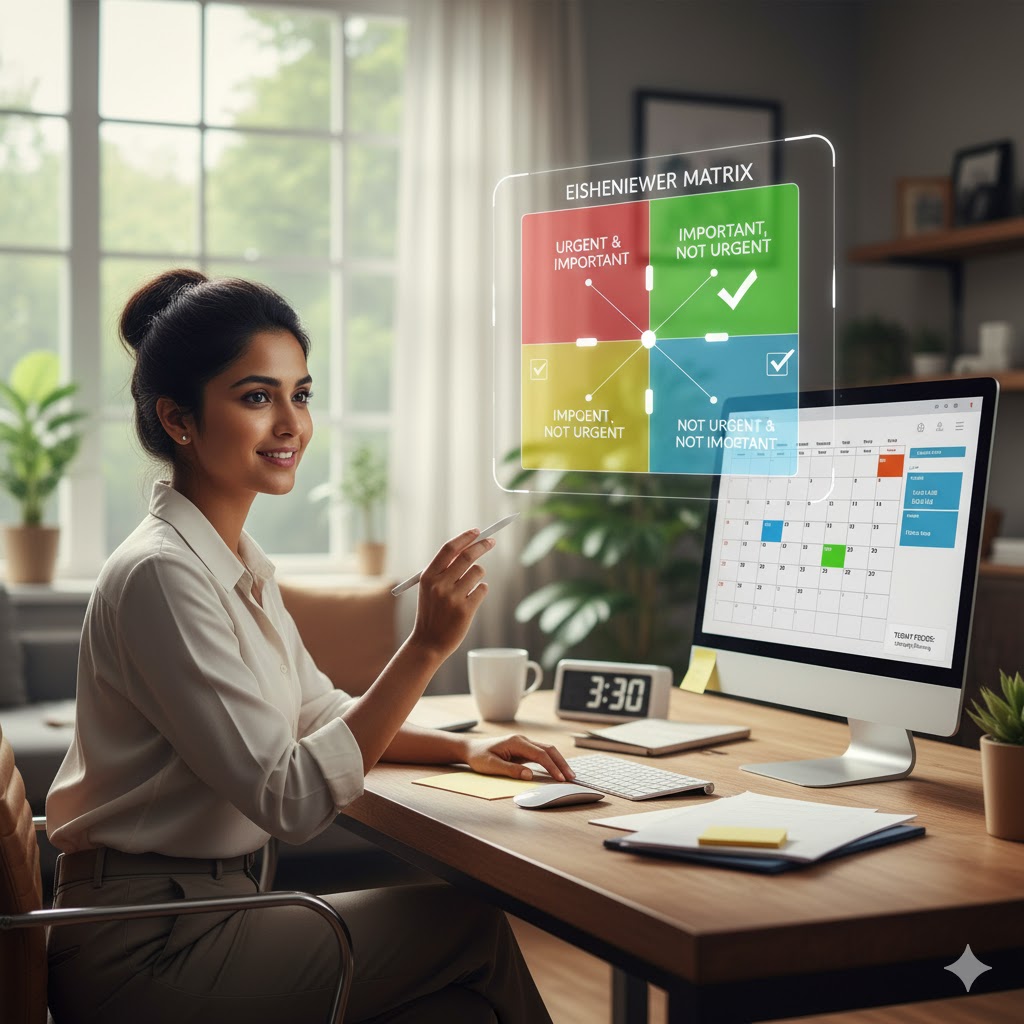
- Prioritize Ruthlessly: Use a system like the Eisenhower Matrix. Ask of any task: Is it Urgent? Is it Important?
- Urgent & Important: Do it now.
- Important, Not Urgent: Schedule it. This is where strategic work happens.
- Urgent, Not Important: Delegate it if possible.
- Not Urgent & Not Important: Delete it.
- Try “Time-Blocking”: Instead of a simple to-do list, block out specific times in your calendar for specific tasks—including breaks, lunch, and deep work.
- Discover “Microshifting”: Forget the rigid 9-to-5. If your work allows, try “microshifting.” This means working in focused bursts when you’re most productive (e.g., 7-9 am), taking a longer personal break midday (for a workout, family lunch, or errands), and logging back on later to finish your tasks.
3. Master Your Digital Wellbeing
Your phone should be your tool, not your boss.

- Curate Your Notifications: Turn off all non-essential notifications. Do you really need a banner to pop up for every single email or chat message?
- Schedule “Unplugged” Time: Designate specific times of the day (e.g., the first hour after you wake up, during meals, and the hour before bed) as “no-screen” zones.
- Use Tech to Fight Tech: Use apps that block distracting websites, set screen time limits, or remind you to take breaks.
4. Prioritize Genuine Rest
Rest is not a reward; it’s a requirement.