
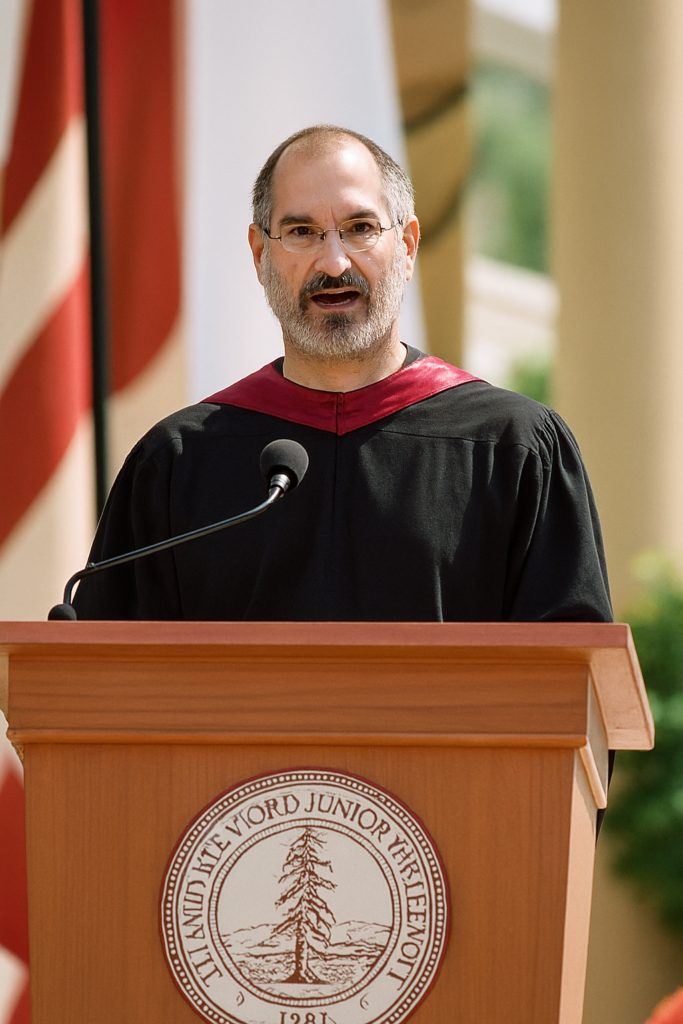
In 2005, Steve Jobs addressed graduates at Stanford University and shared personal stories and experiences that shaped his journey. Rather than presenting business achievements, he spoke about moments that defined his thinking and influenced his life decisions.
Leaving College: Trusting Instinct Over Fear
Jobs explained that he dropped out of Reed College after six months because he could not justify spending his parents’ life savings on an education that did not offer him clarity. His parents had worked hard to send him there, and he felt continuing without direction would burden them financially.
Although he officially left, he stayed on campus informally, attending classes that genuinely interested him. One such class — calligraphy — later influenced the design of the Macintosh at Apple Inc., introducing refined typography into personal computing.
His experience illustrated a recurring theme in his life: decisions driven by curiosity may not make sense immediately, but their value can emerge later.
Started Small — Just Two People in a Garage
At age 20, Steve Jobs co-founded Apple Inc. in his parents’ garage alongside Steve Wozniak. What began as a small partnership gradually developed into a fast-growing technology company.
Within ten years, Apple had become a billion-dollar enterprise. The transition from a garage startup to a global corporation demonstrated how innovation, focus, and persistence can transform modest beginnings into large-scale success.
Fired from His Own Company
Rapid growth did not prevent internal challenges. As Apple expanded, leadership disagreements surfaced. The board ultimately sided with another executive, and Jobs was removed from the company he had co-founded.
He later described this period as painful and disorienting. Losing the company he built created uncertainty about his direction. Yet he would later say that this setback freed him creatively and allowed him to begin again.
Leading to Success — The Acquisition of NeXT and His Return to Apple
After leaving Apple Inc., Jobs founded NeXT, focusing on advanced computer platforms. Around the same time, he played a key role in developing Pixar into a successful animation studio.
Although NeXT did not dominate the market, its technology proved valuable. In 1997, Apple acquired NeXT, bringing Jobs back into the company. He returned first as an advisor, then as interim CEO, and eventually as permanent CEO.
His return marked a pivotal phase in Apple’s history. The company entered a period of renewed clarity and innovation. The episode demonstrated that setbacks can become foundations for future success.
Let Each Day Reflect the Life You Want to Build
For more than three decades, Jobs said he began each morning by asking himself:
“If today were the last day of my life, would I want to do what I am about to do today?”
If the answer was “No” for too many days in a row, he knew change was necessary.
This habit helped him align daily actions with long-term purpose. It sharpened priorities and reduced hesitation.
When he was later diagnosed with cancer, that mindset gained urgency. Although he learned that his condition was treatable, the experience reinforced a belief he had long held — time is limited, and meaningful decisions should not be delayed.
Insight from Inspirelife.in
The enduring relevance of Steve Jobs’ Stanford address lies in its clarity. He did not present success as a straight line. Instead, he spoke about uncertainty, reinvention, and the discipline of aligning decisions with purpose.
His journey shows that setbacks can redirect rather than define a life. Curiosity can open unexpected doors. Reinvention can follow loss. Persistence matters when outcomes are unclear.
At the same time, urgency must be handled with responsibility. Acting with intention does not mean acting impulsively. Decisions often affect families, friendships, and professional relationships.
For students and young professionals especially, the deeper message is to move forward thoughtfully. Ambition should be balanced with awareness. Careful judgement, respect for commitments, and consideration for others remain essential.
True progress lies in balancing conviction with responsibility. In that balance, success becomes both meaningful and sustainable.
Editorial Team, Inspirelife.in