
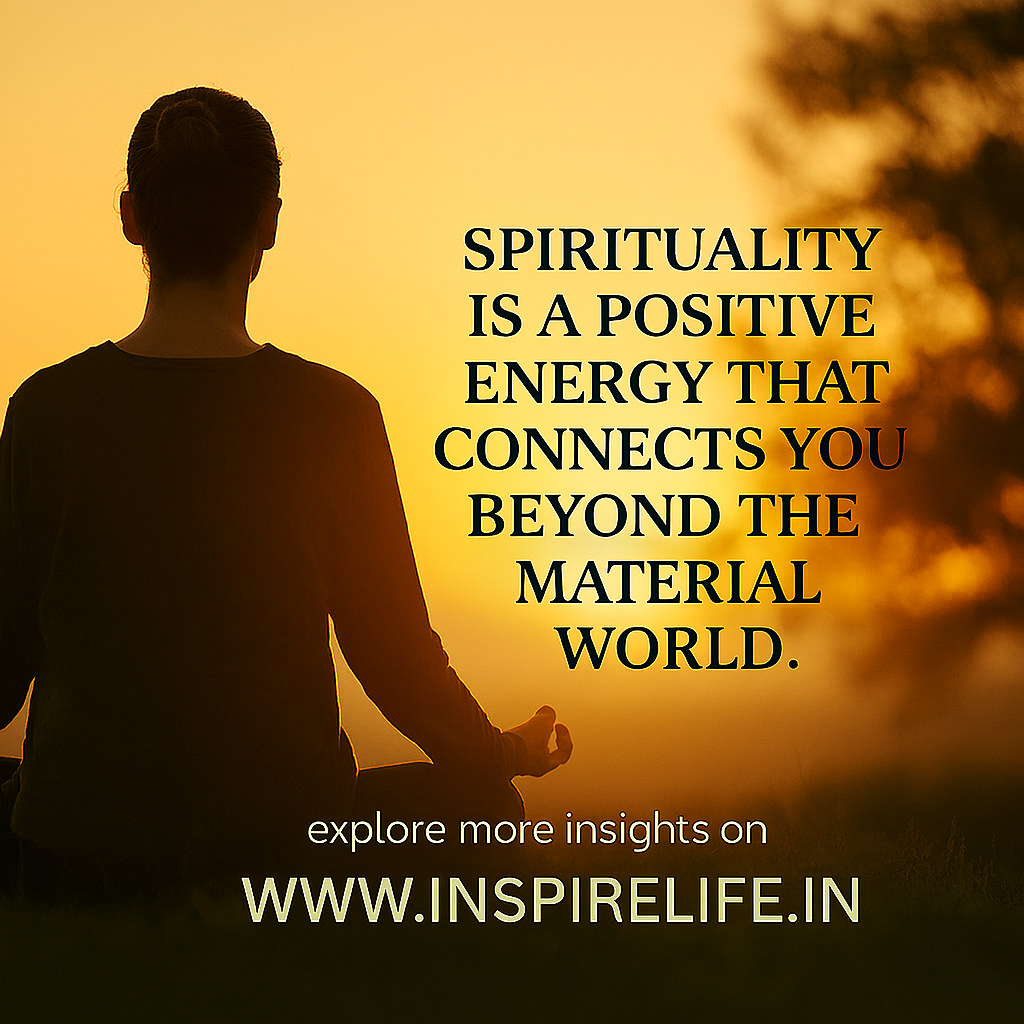
Spirituality is one of those profound concepts that resists simple definition, yet most people intuitively recognize it when they experience it. At its core, spirituality involves the search for meaning, connection, and transcendence beyond the purely material aspects of existence.
Beyond the Material World
Spirituality concerns itself with questions that go deeper than our everyday physical reality: Why are we here? What is my purpose? Is there something greater than myself? It’s the dimension of human experience that reaches toward the sacred, the meaningful, and the eternal—whether or not that involves belief in a traditional God.
Unlike purely intellectual pursuits, spirituality engages the whole person: mind, emotions, and often a sense of something we might call the soul or spirit. It’s about experiencing life at a deeper level, not just thinking about it.
Not the Same as Religion (But They Can Overlap)
While spirituality and religion are related, they’re not identical. Religion typically involves:
- Organized institutions and communities
- Established doctrines and beliefs
- Specific rituals and practices
- Historical traditions and texts
Spirituality, on the other hand, is more personal and individualized. You can be spiritual without being religious (seeking meaning through nature, meditation, or personal reflection) or religious without being deeply spiritual (following traditions out of habit or social convention). Many people find their spirituality enhanced by religious practice, while others discover it entirely outside religious frameworks.
The Core Elements of Spirituality
Despite its varied expressions, spirituality generally includes several common threads:
Connection – A sense of being linked to something beyond yourself: other people, nature, the universe, or a higher power. This dissolves the feeling of isolated separateness.
Meaning and Purpose – The belief that life has significance beyond mere survival or pleasure. Spirituality helps us answer the question “What am I here for?”
Transcendence – Experiences that take us beyond our ordinary ego-consciousness—moments of awe, unity, or profound peace that hint at realities larger than our individual existence.
Inner Life – Attention to the interior landscape of thoughts, feelings, values, and consciousness itself. Spirituality turns us inward to explore who we really are beneath our social roles and daily concerns.
Sacred Awareness – The recognition that life contains something worthy of reverence, whether that’s the divine, the mystery of existence, the beauty of nature, or the preciousness of consciousness itself.
How People Practice Spirituality
Spirituality manifests in countless ways across cultures and individuals:
- Meditation and contemplation – Quieting the mind to access deeper awareness
- Prayer – Communicating with or opening oneself to the divine or transcendent
- Connection with nature – Finding spiritual renewal in wilderness, gardens, or natural beauty
- Creative expression – Accessing the sacred through art, music, dance, or writing
- Service to others – Experiencing spiritual fulfillment through compassion and generosity
- Study of wisdom traditions – Engaging with philosophical or religious texts
- Mindful living – Bringing spiritual awareness to everyday activities
- Ritual and ceremony – Marking meaningful transitions and connecting with tradition
- Body practices – Using yoga, tai chi, or movement to integrate body and spirit
The Experiential Dimension
What distinguishes spirituality from mere philosophy is its experiential nature. It’s not just believing certain ideas about reality—it’s directly experiencing connection, transcendence, or meaning. These experiences might include:
- Moments of profound peace or stillness
- Feelings of unity with all things
- Encounters with beauty that move us to tears
- Sudden clarity about life’s meaning
- Experiences of unconditional love
- Awe before mystery or vastness
- A sense of being guided or held
These aren’t just pleasant emotions; they feel like encounters with truth at a deeper level than ordinary consciousness accesses.
Spirituality in Secular Contexts
Modern spirituality has increasingly become divorced from traditional religious frameworks. Many people describe themselves as “spiritual but not religious,” seeking meaning through:
- Humanistic values of compassion and growth
- Scientific wonder at the cosmos
- Philosophical inquiry into existence
- Psychological exploration of consciousness
- Ethical commitment to making the world better
Even atheists and agnostics can have rich spiritual lives if spirituality is understood broadly as the search for meaning, the cultivation of wisdom, and connection to what matters most.
Why Spirituality Matters
Spirituality addresses fundamental human needs that material success alone cannot satisfy. We need to feel that our lives mean something, that we belong to something larger, that our suffering has purpose, and that love and goodness are real and important. Spirituality provides frameworks for making sense of joy, suffering, death, and the mystery of existence itself.
In a world that often feels fragmented and meaningless, spirituality offers wholeness and purpose. It doesn’t necessarily provide easy answers, but it gives us ways to live with life’s deepest questions.
Ultimately, spirituality is deeply personal. What feels spiritually authentic to one person may not resonate with another. It’s less about adopting a particular belief system and more about cultivating awareness, seeking truth, and living in alignment with what you discover to be most meaningful and real. Spirituality is the journey of becoming fully alive to the sacred dimension of existence—however you understand and experience that dimension.Retry